
Prototype to Production: When to Move from Development to Manufacturing

How to know when your prototype is ready to become a production part - and how to make that transition without expensive rework.
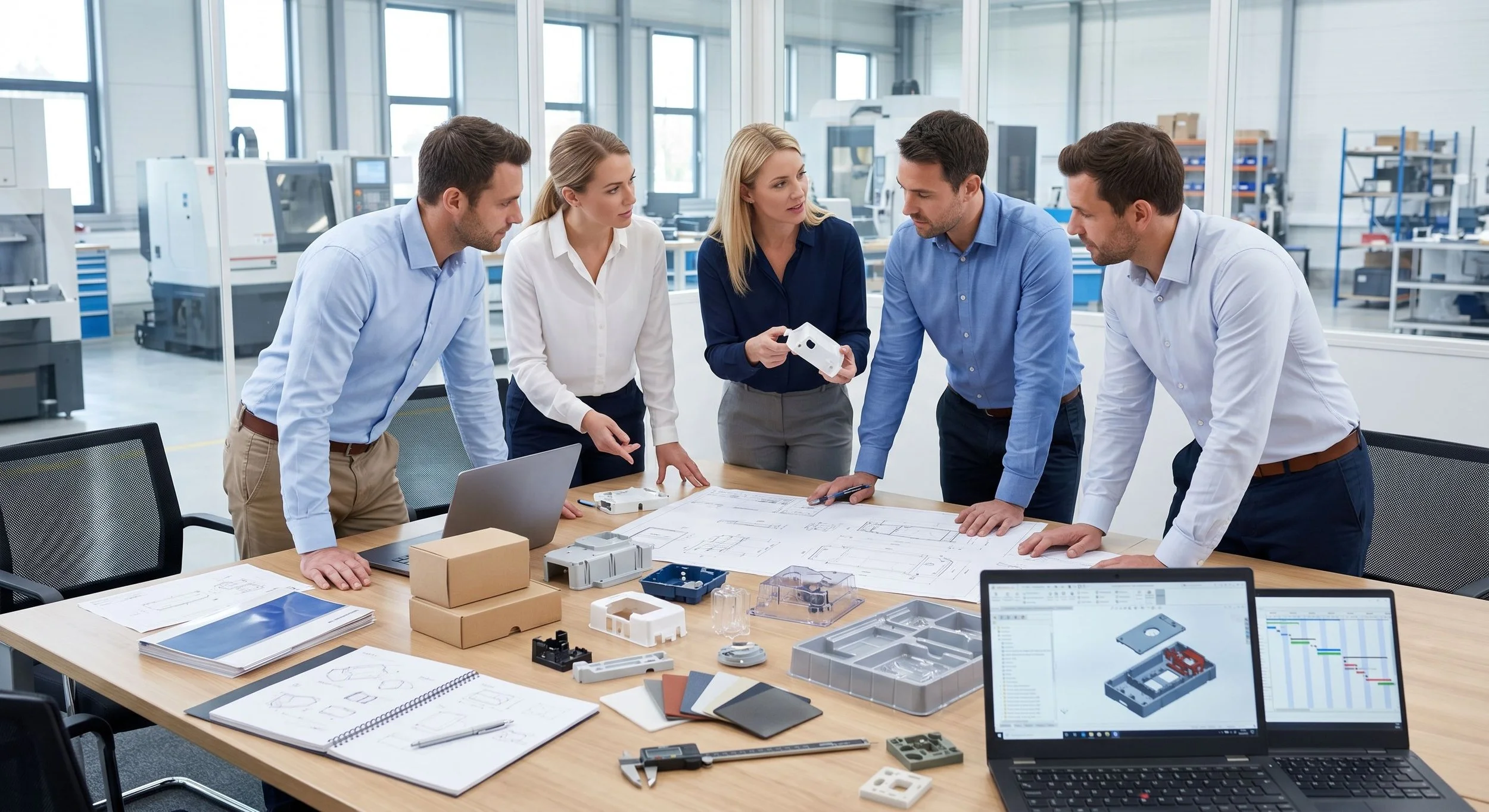
Prototyping is one of the cheapest insurance policies in product development. A 3D-printed or CNC-machined prototype lets you put a real, testable part in real hands long before tooling is committed - and the cost of changing a part at prototype stage is a tiny fraction of changing it after tooling.
But prototypes are not products. At some point you have to move from one to the other, and that decision deserves more thought than it usually gets. This page is a practical guide to making that transition well.

Combining full ISO certification with DISP accreditation, B&C Plastics provides high-quality, secure, and traceable plastic injection moulded components engineered for reliability and performance.
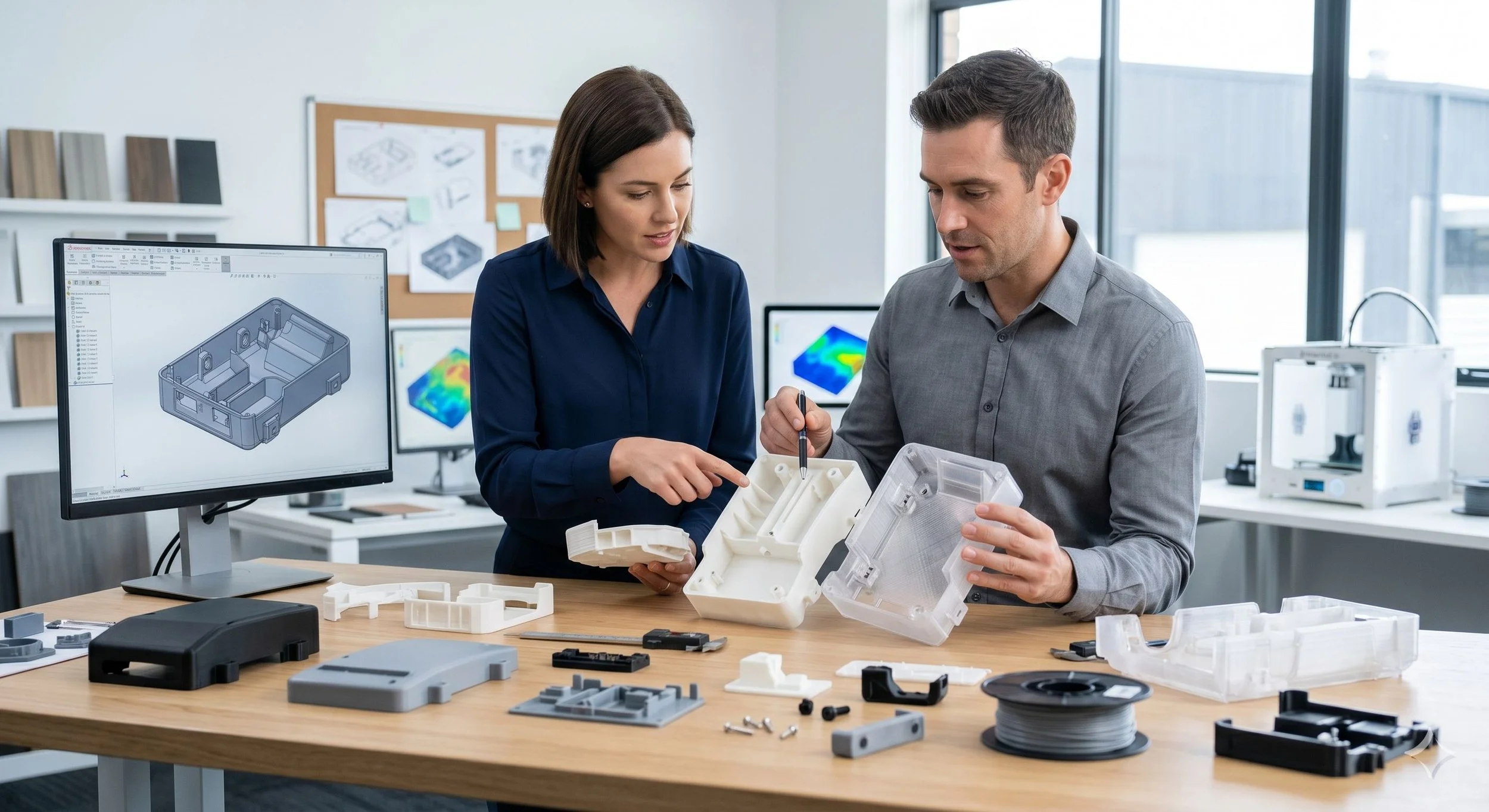
Why prototyping matters before production
Building a tool is a serious commitment. A typical injection mould for a moderate-complexity part costs anywhere from $15,000 to $80,000 or more, takes 8 to 16 weeks to build, and is extremely difficult - sometimes impossible - to change once it is steel.
Prototyping lets you discover problems while problems are still cheap. Specifically, prototyping helps you:
Validate that the part actually does what you designed it to do
Test fit, ergonomics and assembly with mating components
Show the product to customers, distributors or buyers before committing
Uncover material problems (warpage, brittleness, surface finish) early
De-risk regulatory testing and certification
Refine the design with low-cost iterations
A useful test: if you cannot answer the question "what would I change if I made another one?", you are probably ready to tool. If you can answer it, prototype again first.
Prototyping methods we use
Different prototyping methods suit different stages of development. We use whichever is right for your project.
| Method | Best for | Typical lead time |
|---|---|---|
| FDM 3D printing | Form, fit, early concept review | 1 - 3 days |
| SLA / SLS 3D printing | Higher resolution, functional testing | 3 - 7 days |
| CNC machining | Strong functional prototypes in real materials | 1 - 2 weeks |
| Pilot tooling (soft tool) | Pre-production validation, small market trials | 4 - 8 weeks |
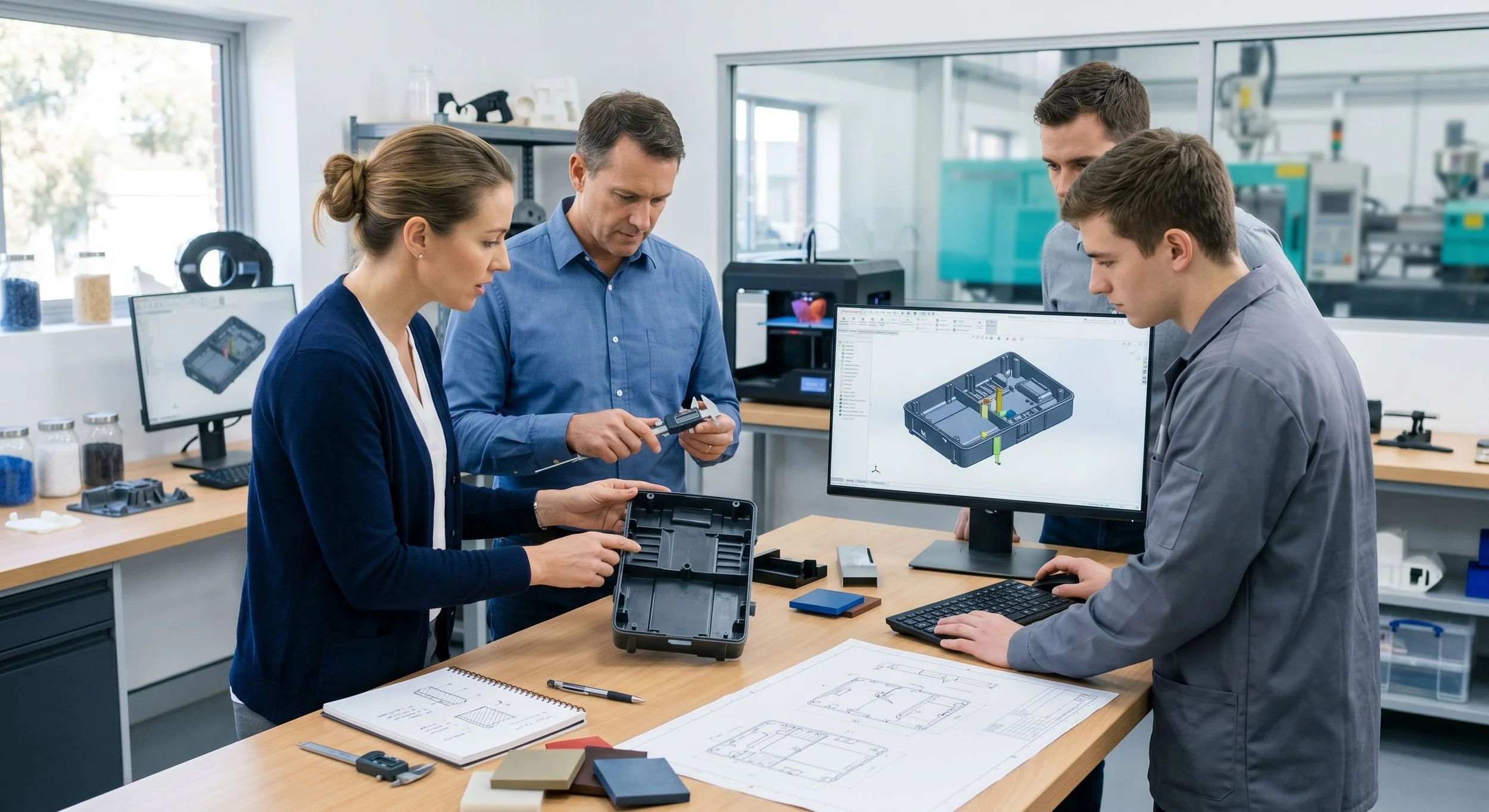
Signs you are ready to move to production
There is no perfect moment, but there are reliable signals. You are usually ready to commit to production tooling when:
The design is stable: you have not made meaningful changes in the last two or three iterations
Function is proven: the prototype does the job under realistic conditions, not just on the bench
Ergonomics and aesthetics are signed off: the right people have held it, used it and approved it
Mating parts are confirmed: anything that connects to or interacts with the part has been validated
Material is final: you have tested in the actual production polymer, not just in 3D-printed substitutes
Volume is justified: your forecast supports the tooling investment over a reasonable amortisation period
Regulatory or compliance testing is complete (or scoped): you know what certification you need and how the part will pass it
Signs you are NOT ready
Some signals suggest you should keep prototyping a little longer. None of these mean the project is in trouble - they just mean tooling is premature.
You are still actively iterating the geometry
The market or customer requirements are still being negotiated
Material selection is unresolved
Mating parts have not yet been finalised
Volumes are uncertain - you do not know if you need 1,000 or 100,000 units
There is internal disagreement about what the product should be
Bridge strategies between prototype and production
Sometimes you genuinely need to be in market before full tooling makes sense. There are several bridge strategies:
Pilot or soft tooling
Aluminium or low-cavitation steel tooling, designed to produce real moulded parts in production materials. Lower upfront cost than full production tooling, but shorter tool life. Ideal for market validation runs of a few hundred to a few thousand parts.
CNC-machined production parts
For very low volumes (under 100 parts) or for applications where the part can be machined from solid plastic stock, CNC can be a viable production method without any tooling at all.
How we manage the transition at B&C
Because we run design, prototyping, tooling and production under one roof, the transition from prototype to production is a continuous process rather than a handover. The same engineers who designed your part also brief the toolmaker, validate first-off samples and oversee the production launch.
Our prototype-to-production process typically includes:
Final DFM review and design lock
Tooling design release with mould flow validation
Tool build and trial (T1, T2, T3 sample runs)
First-off sample inspection against signed-off CAD
Production process validation and PPAP-style documentation if required
Pilot production run for final approval
Transition to ongoing supply
Lead times from approved design to first production parts
Once a design is approved and tooling is released, typical timelines from B&C are:
| Project type | Time to first production parts |
|---|---|
| Standard injection mould (single cavity, moderate complexity) | 8 - 12 weeks |
| Multi-cavity production tool | 12 - 18 weeks |
| Pilot / soft tool | 4 - 8 weeks |
Frequently asked questions

-
Yes. Many clients use our prototyping capability and then engage us further. Others bring already-validated designs to us for tooling and production. We are happy with both.
-
Most products go through 3 to 6 prototype iterations before tooling. Simple parts may need only 1 or 2. Highly novel products sometimes need 10 or more. We will guide you on what is appropriate for your project.
-
Some changes can be made to existing tooling - adding material is much harder than removing it. We will always tell you honestly what is possible, what it will cost, and whether a new tool would actually be cheaper than reworking the existing one.

Ready to talk to an engineering-led plastics partner?
Whether you have a fully developed brief or a rough concept, the B&C Plastics team can help you scope, design, prototype, tool and manufacture in one place - right here in Australia.
Call us on (07) 3208 0544
Email enquiries through our contact page
Or visit our Meadowbrook facility, 20 minutes south of Brisbane
Honesty, quality and partnership - today, tomorrow and every day.