
UHMWPE Plastic


UHMWPE Plastic
Ultra-high molecular weight polyethylene delivering superior abrasion resistance, self-lubricating friction properties, and impact strength - engineered for mining, bulk handling, and processing equipment demanding extended service intervals.
Abrasion resistance exceeding standard engineering plastics
Outperform HDPE, nylon, and acetal in conveyor wear strips, chute liners, and material handling applicationsSelf-lubricating surface minimizes friction and material adhesion
Reduce energy consumption and prevent build-up in bulk material flow systemsPrecision CNC machining from sheet and rod stock
Fabricate custom bushings, guide rails, and wear components with tight tolerancesChemical resistance and dimensional stability
Maintain performance in wet environments and industrial processing conditionsIntegrated engineering capability
Material validation, CNC fabrication, and production support under one Australian manufacturer
Share your wear environment and performance requirements. We'll assess UHMWPE suitability and recommend fabrication approach.


Combining full ISO certification with DISP accreditation, B&C Plastics provides high-quality, secure, and traceable plastic injection moulded components engineered for reliability and performance.
UHMWPE Plastic: Properties, Applications, and Why Engineers Choose It for High-Wear Environments
UHMWPE plastic is an ultra high performance thermoplastic polyethylene material known for exceptional abrasion resistance, extremely low friction, and very high impact strength, making it widely used in industrial machinery, mining equipment, food processing systems, and heavy duty engineering applications.
At B&C Plastics, we regularly work with engineering managers, procurement teams, and product developers across Australia who need reliable UHMWPE plastic solutions for demanding industrial environments. This guide explains how the material works, why it performs so well in high wear applications, and how it is typically supplied and fabricated.
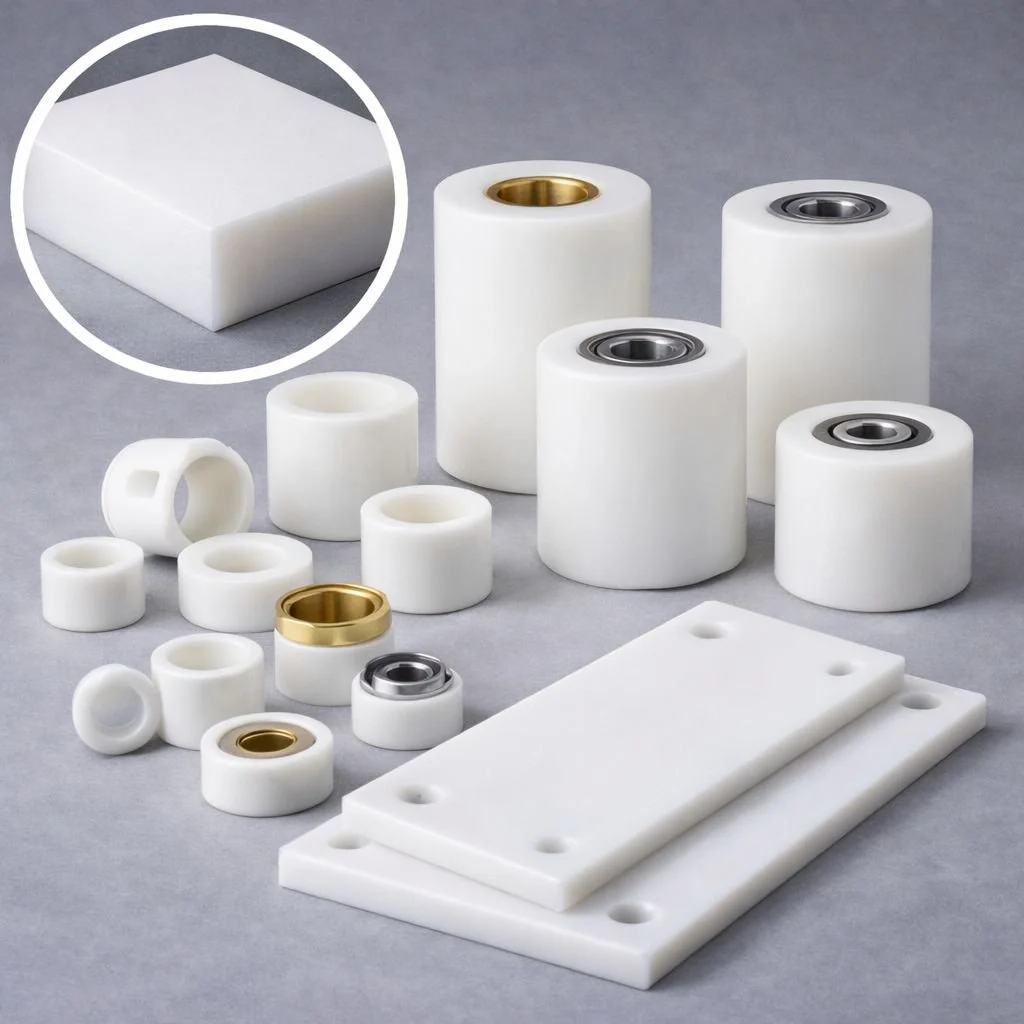
What Is UHMWPE (Ultra High Molecular Weight Polyethylene)?
UHMWPE stands for Ultra High Molecular Weight Polyethylene, a type of thermoplastic polyethylene with extremely long molecular chains. These molecular chains create a dense internal structure that gives the material exceptional toughness, durability, and wear resistance compared with standard polyethylene or HDPE.
Because of these molecular characteristics, UHMWPE plastic is considered one of the most impact resistant plastics available. It is frequently used in environments where parts are exposed to sliding friction, heavy loads, or repeated mechanical movement.
Compared with common plastics used in engineering applications such as PVC, nylon, acetal, polycarbonate, or acrylic sheets, UHMWPE offers a unique balance of:
High abrasion resistance
Extremely low friction surface behaviour
High impact strength
Excellent chemical resistance
Lightweight performance
These properties make UHMWPE a popular material for conveyor wear strips, chute liners, machine guides, marine fenders, and material handling components.
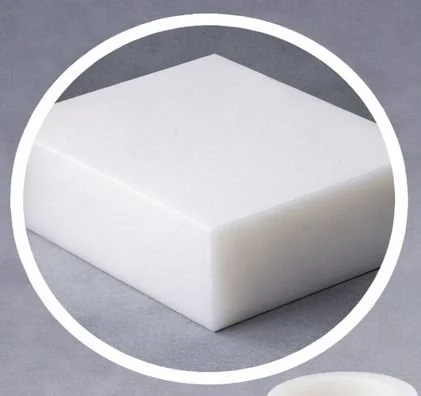
Key Characteristics of UHMWPE Plastic
Several characteristics explain why UHMWPE plastics perform so well in industrial environments.
First, UHMWPE is extremely tough and durable. The ultra high molecular weight of the polyethylene chains allows the material to absorb impact energy without cracking or breaking.
Second, the material has self lubricating surface behaviour. The natural low friction properties allow components to slide smoothly against other materials such as metal, wood, or rubber. This reduces mechanical wear and improves equipment efficiency.
Third, UHMWPE offers excellent chemical resistance. The polyethylene structure resists many acids, cleaning agents, and solvents. It also has very low water absorption, which makes it suitable for wet or outdoor environments.
Because of these properties, UHMWPE plastic sheets, rods, and machined components are widely used in industries that depend on long service life and reliable wear performance.

Why UHMWPE Is Used in Industrial Applications
Industrial environments often expose machinery and components to continuous movement, heavy loads, and abrasive materials. In these conditions standard plastics can wear down quickly.
UHMWPE is commonly selected because it delivers performance advantages that reduce downtime and maintenance. For example:
High abrasion resistance reduces wear in conveyor systems and chutes.
Low friction surfaces allow materials to slide easily, preventing build-up.
Impact strength protects equipment from sudden loads or collisions.
Chemical resistance helps parts survive harsh industrial environments.
Because of these properties, UHMWPE plastic components appear across many industries including mining, food processing, construction, agriculture, and packaging.
Meet the Team
-
Key Features and Benefits of UHMWPE
UHMWPE plastic offers several engineering advantages that distinguish it from other plastics like HDPE, PVC, nylon, acetal, PTFE, or polycarbonate.
-
Exceptional Wear and Abrasion Resistance
One of the most valuable properties of UHMWPE plastic is its ability to resist wear in high friction environments. When bulk materials move through machinery, surfaces experience constant abrasion.
UHMWPE sheets and liners are often installed inside chutes, hoppers, conveyor guides, and feed systems because the material can withstand repeated contact without significant damage.
Compared with many engineering plastics, UHMWPE provides significantly longer service life in high wear applications.
-
Low Friction Surface Properties
UHMWPE also has one of the lowest friction coefficients among engineering plastics. The surface allows materials to slide easily across it, which improves flow efficiency and reduces mechanical resistance.
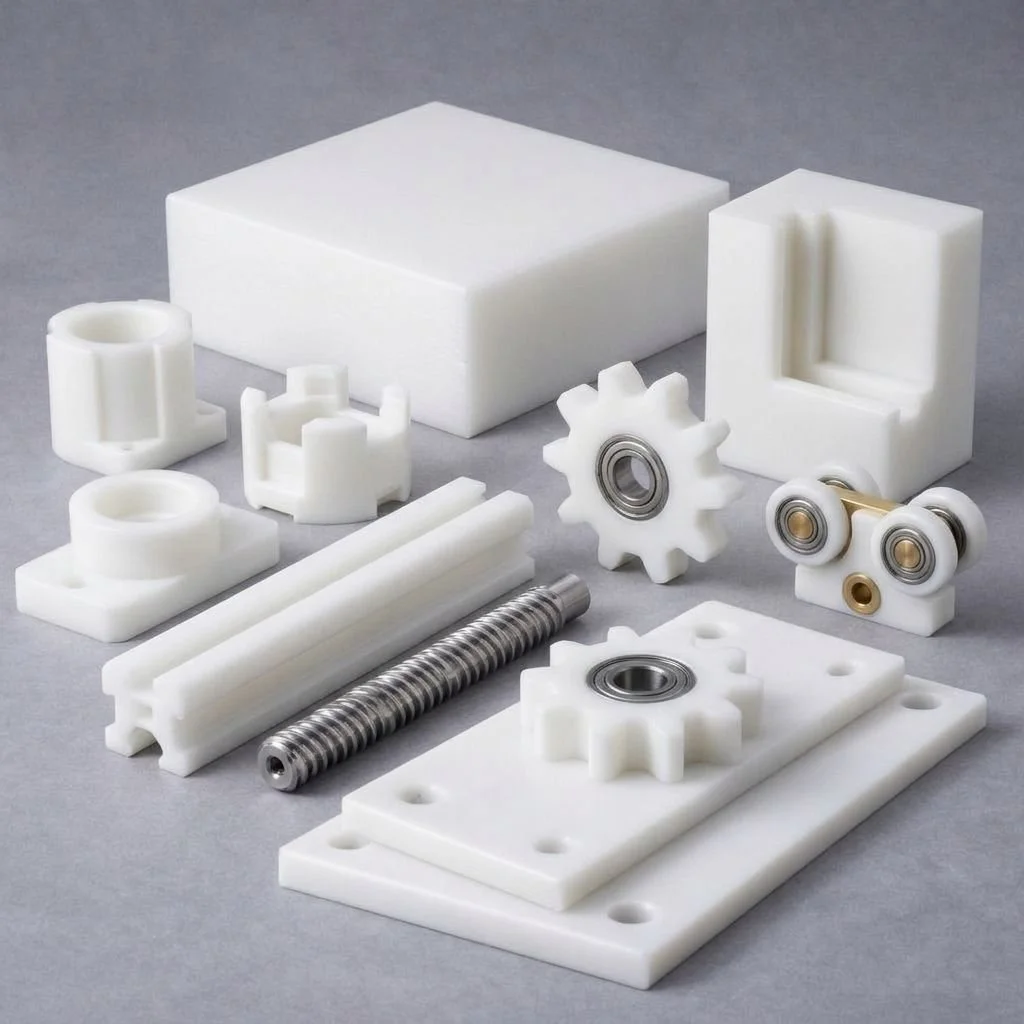
This self lubricating behaviour makes UHMWPE suitable for components such as:
● Conveyor wear strips
● Sliding guides
● Machine rails
● Packaging equipment surfaces
Low friction surfaces reduce energy consumption in machinery and help prevent material blockages.
-
Chemical and Moisture Resistance
UHMWPE polyethylene also demonstrates strong resistance to chemicals and moisture. The material performs well in environments where exposure to cleaning agents, water, or industrial chemicals is common.
Because it absorbs very little moisture, UHMWPE plastic maintains dimensional stability even in wet environments. This property is particularly valuable in industries such as food processing and marine infrastructure.
Common Applications of UHMWPE Plastic
UHMWPE plastic components appear across a wide range of industries where wear, friction, and impact are common challenges.
Industrial Machinery Components
Many industrial machines rely on UHMWPE wear components to protect metal equipment surfaces.
Common examples include:
Conveyor wear strips
Machine guide rails
Feed screws and hopper liners
Packaging equipment components
Material handling parts
These components are often manufactured from UHMWPE sheets or rods using CNC machining, router cutting, or fabrication techniques.
Marine and Infrastructure Applications
UHMWPE is also used in marine environments because it resists corrosion and water absorption.
Typical applications include:
Marine fenders
Dock protection systems
Sliding structural pads
Bridge bearing surfaces
The material's low friction properties allow heavy structural components to move smoothly under load.
Food Processing and Material Handling
Many food processing facilities use UHMWPE plastic components because the material is durable and hygienic. Certain grades are available with FDA compliant formulations suitable for food contact equipment.
Applications include:
Food conveyor guides
Cutting boards and liners
Packaging equipment components
Sliding surfaces for automated systems
The smooth surface helps maintain hygiene and simplifies cleaning processes.
UHMWPE Material Forms and Availability
UHMWPE plastic is available in several forms depending on how the material will be used or fabricated.
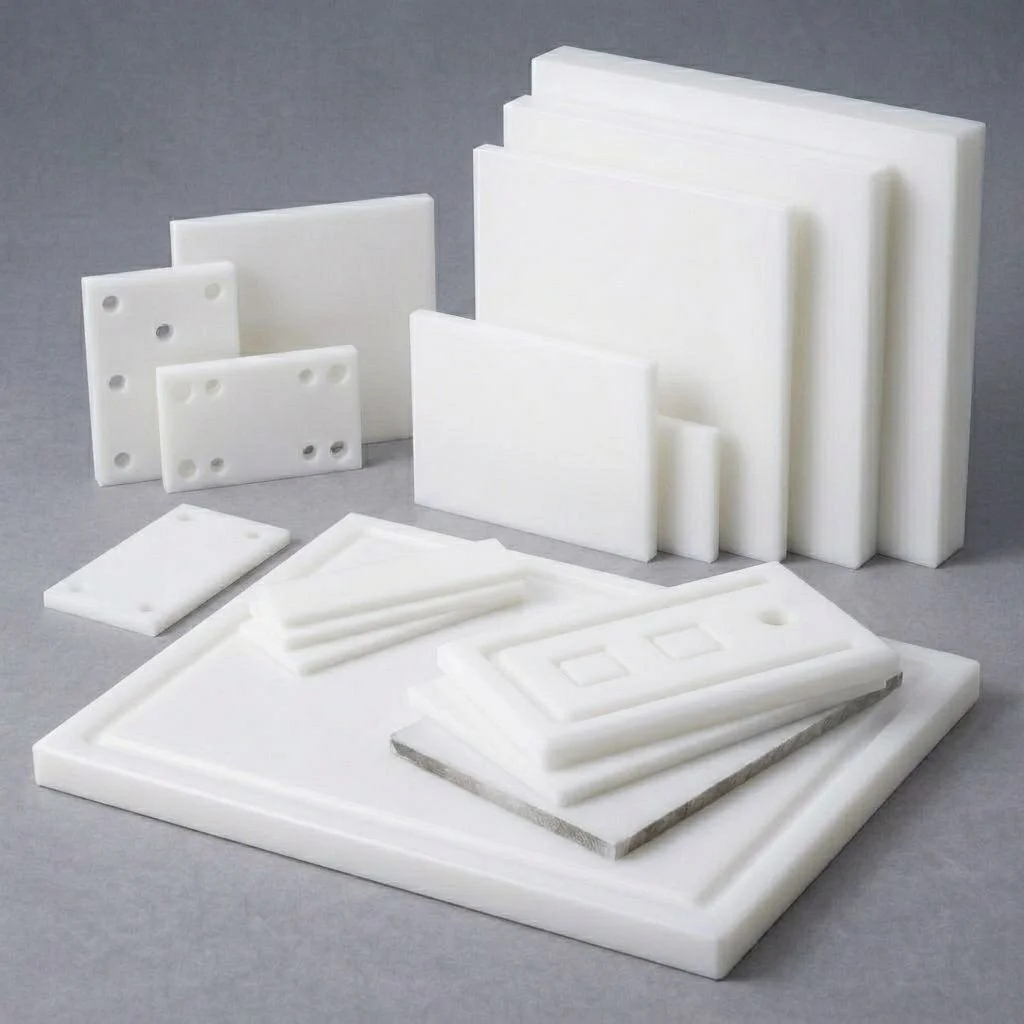
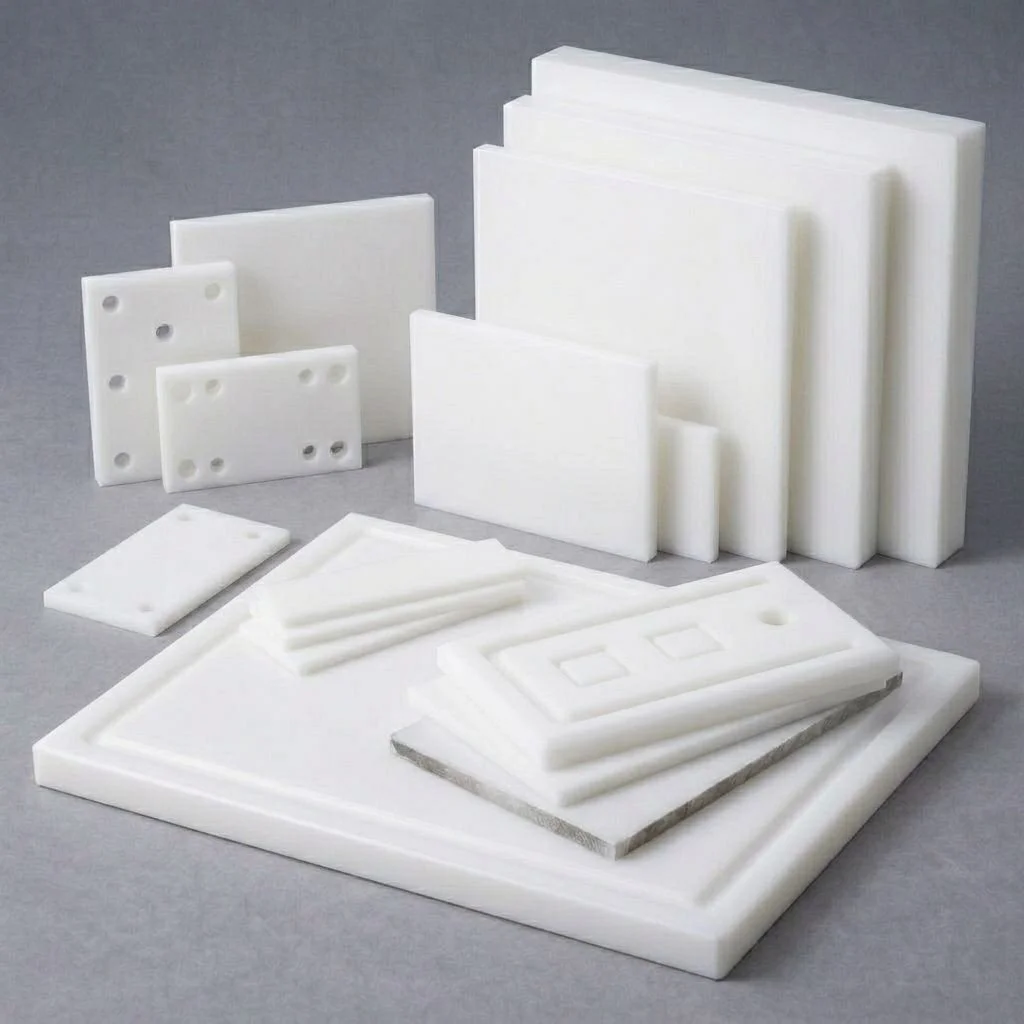
UHMWPE Sheets
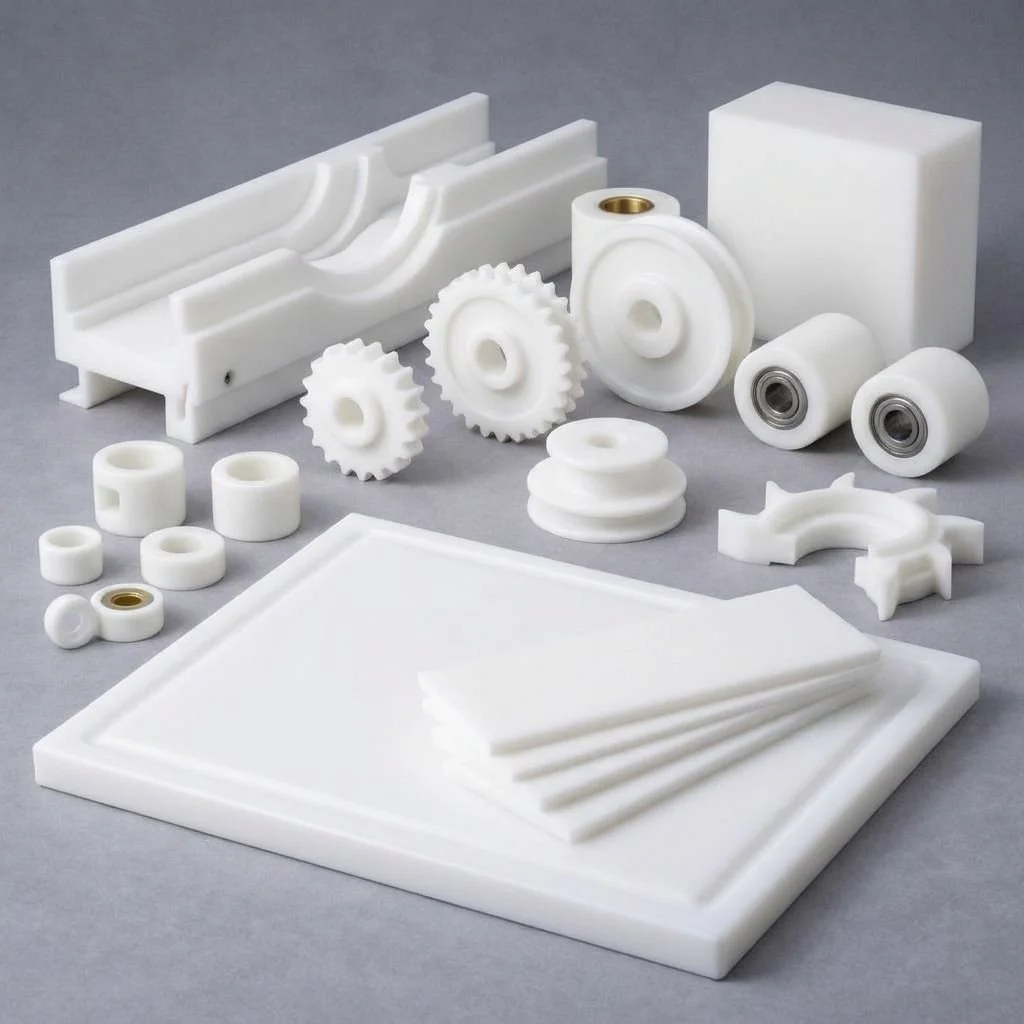
UHMWPE sheets are one of the most common forms of the material. Sheets are typically supplied in multiple thickness options and can be cut to size for industrial applications.
These sheets are often used for:
Wear liners in chutes and hoppers
Machine guards and sliding panels
Structural protection surfaces
Sheets can be cut, drilled, routed, or machined depending on the project requirements.
UHMWPE Rods and Machined Components
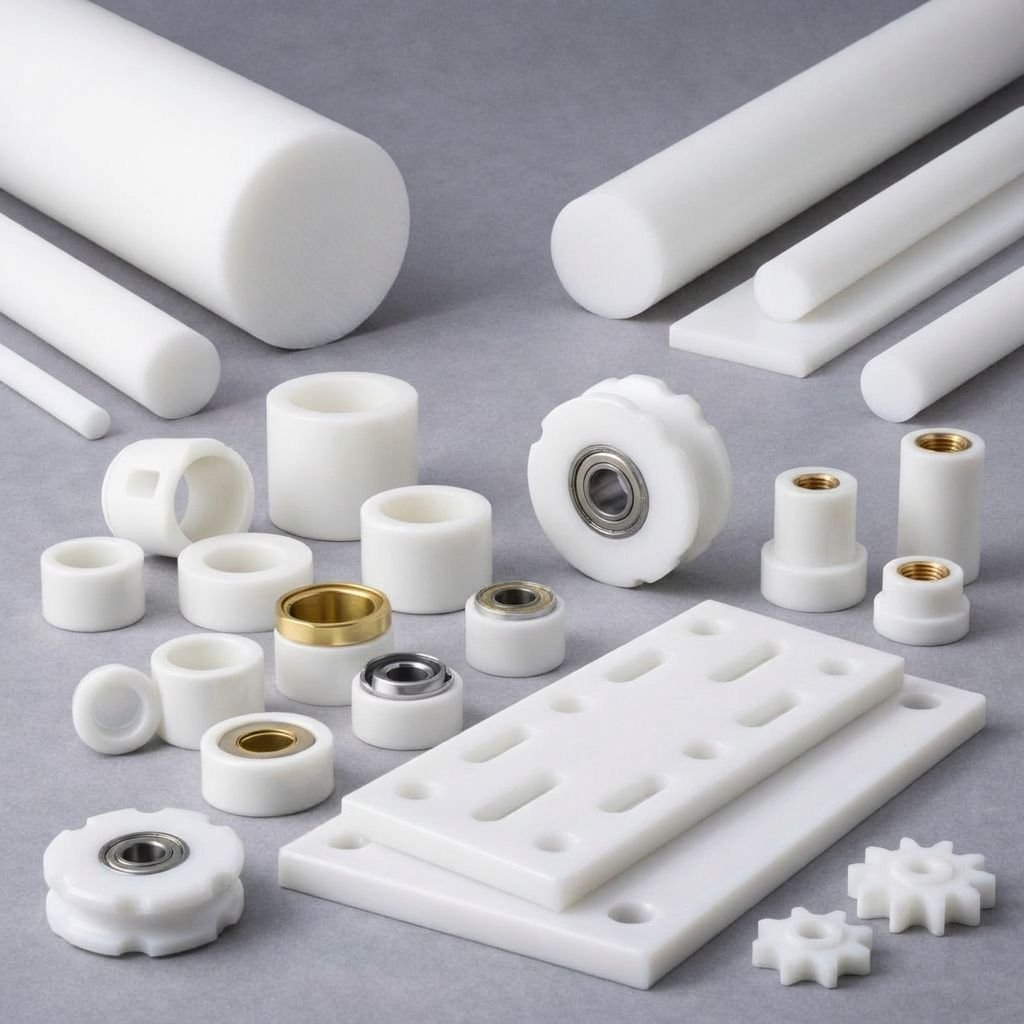
UHMWPE rods are used when precision plastic parts need to be manufactured through machining processes.
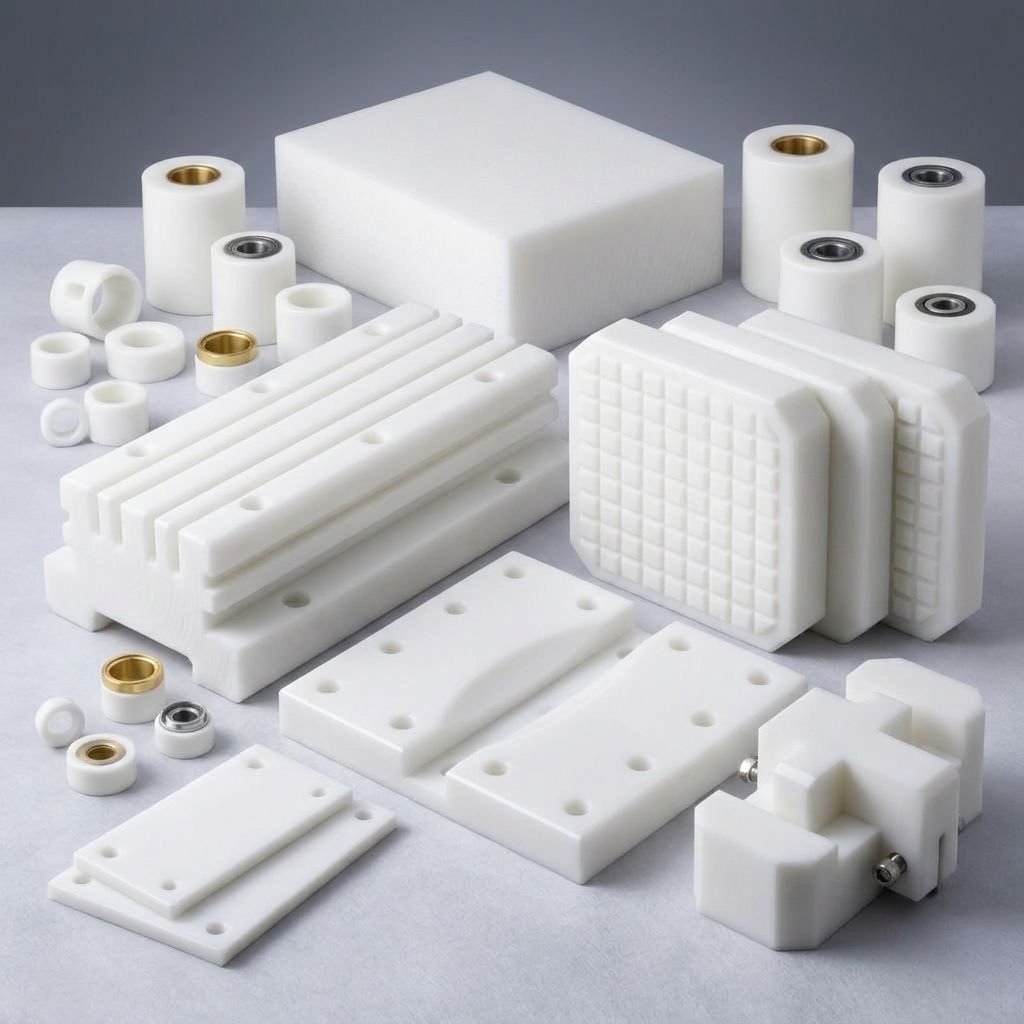
Rod stock allows manufacturers to create custom components such as:
Bushings
Rollers
Guide wheels
Mechanical spacers
CNC machining allows these parts to be manufactured with tight tolerances and repeatable quality.
Colour and Grade Options
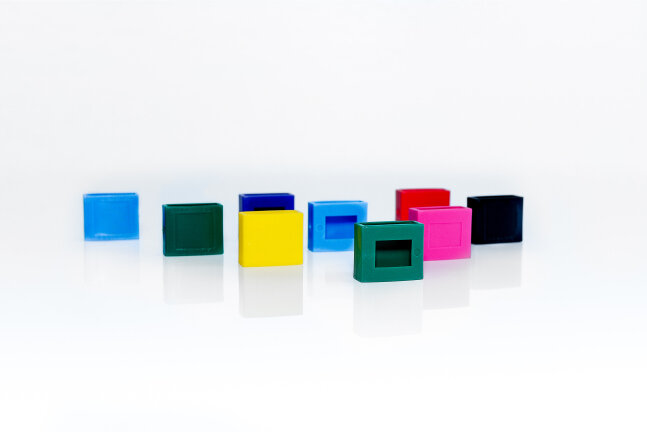
UHMWPE plastic is typically available in several colours depending on the application. The most common colours include:
Natural white
Black
Green
Different grades may be formulated for specific applications such as food processing, heavy wear environments, or specialised engineering uses.
Simple 3 Step Process for UHMWPE Component Development
| Step | What Happens | Outcome |
|---|---|---|
| 1. Material Selection | Engineers evaluate wear conditions, friction requirements, and chemical exposure. | The correct UHMWPE grade is selected |
| 2. Prototyping or Machining | Sheets or rods are CNC machined or router cut into prototype components. | Design validation before production |
| 3. Production and Installation | Parts are manufactured and integrated into equipment or machinery. | Durable, long-life UHMWPE components |
This structured development approach reduces risk and ensures the material performs reliably in real working conditions.
Technical Resources and Product Enquiries
Selecting the right UHMWPE material depends on the specific application, operating environment, and performance requirements.
Access UHMWPE Technical Datasheets
Before specifying UHMWPE for a project, engineers often review technical data sheets that describe material properties such as:
Density and molecular structure
Abrasion resistance values
Friction coefficients
Chemical compatibility
Impact strength
Technical documentation helps confirm whether UHMWPE plastic is suitable for the intended application.

Request Expert Advice on UHMWPE Materials
If you are evaluating UHMWPE sheets, rods, or machined components for your project, our team at B&C Plastics in Australia can help.
We regularly assist organisations across mining, construction, agriculture, packaging, and manufacturing industries with:
Material selection
CNC machining and fabrication
Product prototyping
Injection moulding and production
Engineering design support
If you would like technical advice, datasheets, or a quote for UHMWPE plastic components, contact the B&C Plastics team today. We are always happy to help you choose the right material and manufacturing approach for your project.